


Why I read all the books, even the bad ones
For those of you who are vaguely interested, I have been down a rabbit hole researching Anglo-Saxon paganism. Not for a book (I know, shocker!), but for my own personal pathway.

I have a huge pile of books on the Anglo-Saxons from a historical viewpoint (borrowed from my dad, with thanks). However, it seems books on working with the Anglo-Saxon path from a modern perspective are few and far between; decent books even rarer.
Two of the books I have had on my bookshelf for a few years and never read, but now they are well-thumbed and full of Post-it notes – both by the author Alaric Albertsson, and they are fantastic. Along with a very good book on Anglo-Saxon runes by Suzanne Rance. Leechcraft by S Pollington is a given (also one I have had for a few years), and Martha Grey’s Nine’s a Charm for the herbal side of things. An Anglo-Saxon – English dictionary has also been an inspiration!
Then I begin to flounder.
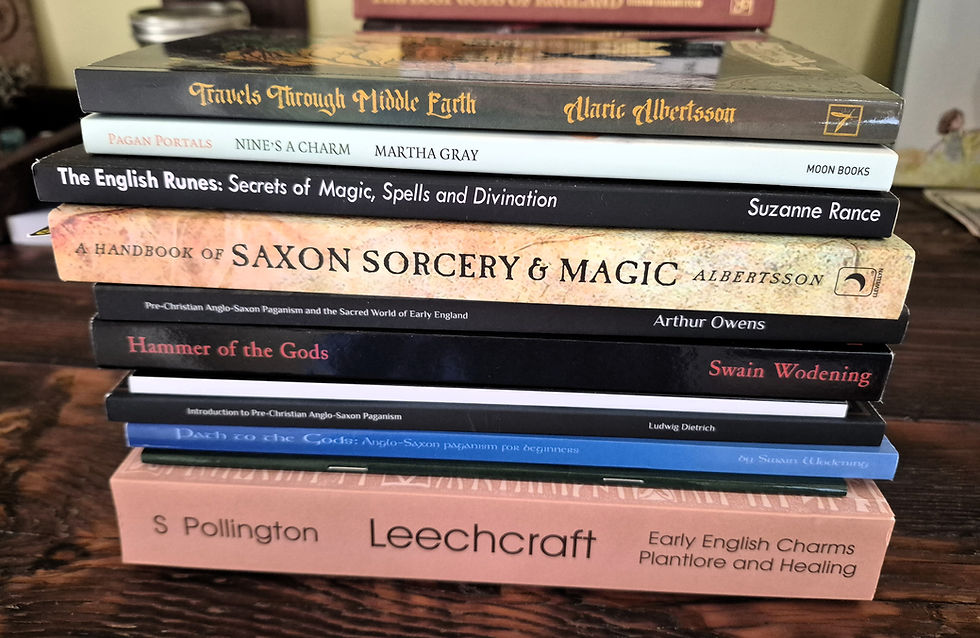
Several books by a well-respected author have surprisingly fallen short, with very muddled and confused information. Another author whose books have very high ratings on Amazon, but come with a warning from a fellow author that they should be avoided due to misinformation and a bad reputation.
But, and here’s the thing – I have read all of the books in the pile, even the ones that came with a warning. Why would I do that? Because even the badly written books, even the ones with misinformation, will teach me something. I do not and never will take information as fact without checking the sources, but even some small pieces of information can lead me to another author, another source, another book or another inspirational moment. So I am soaking up all the information I can get my hands on; some of it will stick, some of it will be discarded, but all of it will be useful in some way.
If anyone has any recommendations for authors, books or sources on Anglo-Saxon paganism, please feel free to pop the info in the comments; it would be greatly appreciated.
Ic þancie ēow! (Thank you)

